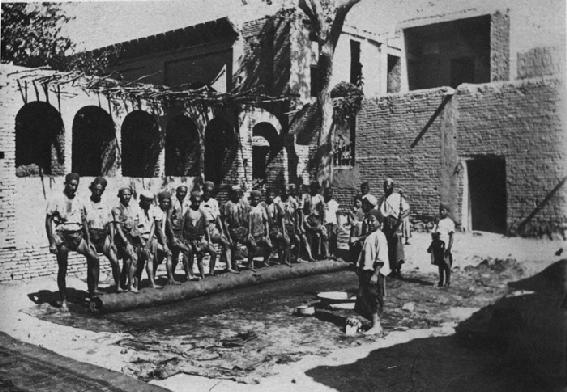
FELT (Mid. and New. Pers., namad), material produced by process of felting, the entanglement of animal fiber in all directions, appropriately done to form a soft and homogeneous mass. The technique was originally devised in nomadic communities of Central Asia (Pazyryk, 5th to 3rd centuries B.C.E., see Bidder, pp. 29 ff.; Burkett, 1979, pp. 7 ff.; Baranski), spreading toward China and the Greek world well before the 3rd century B.C.E., but for a long time confined to the Asian continent (Laufer).
The method of felt-making, rather simple and uniform, constitutes the basis for a large number of products currently in use. As is often the case, the banality of the phenomenon have contributed to leading researchers astray; the techniques, usages, and aesthetics of felt appear, therefore, to be relatively unknown, particularly in comparison to those of what is perceived as the more “noble” craft of weaving.
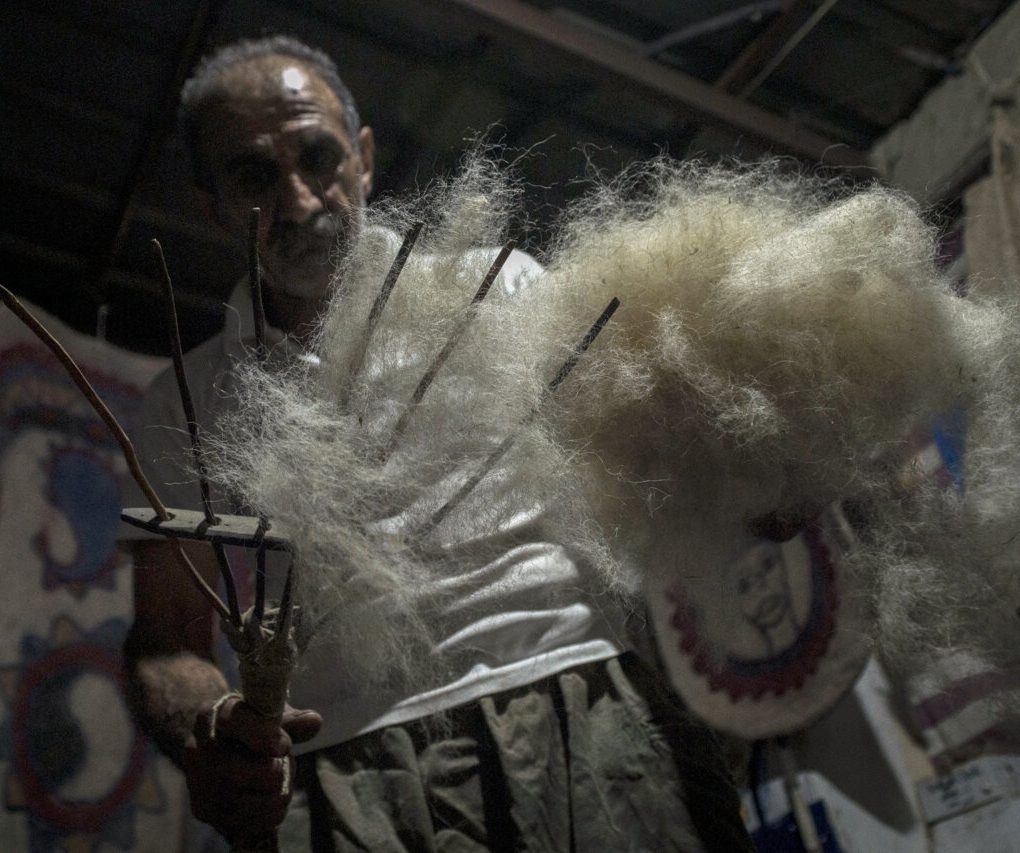
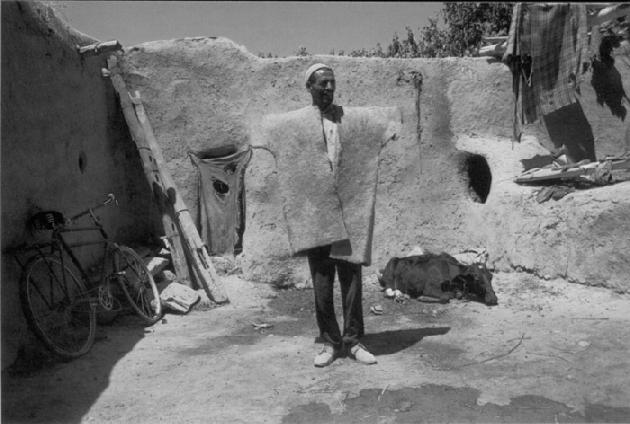
Production. The main primary substances used in the production of felt are camel and sheep wool (preferably that of autumn, the second shearing season, and of lamb wool, which are finer), goat’s underhair (Pers. kork/kolk) taken from the animal by combing, which produces felt of a higher quality (Burkett, 1976, p. 61). By contrast, in the case of some felts of inferior quality, left-over cottons are sometimes mixed with wool (Dupaigne, 1968, p. 54). To produce a felt overcoat or a carpet of 1.2 x 2 m, four to five kg of wool are required; a yurt requires 130 kg, that is, 150 to 200 lamb fleeces
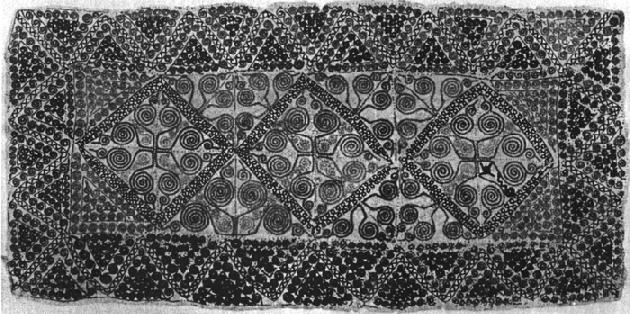
Most felts are made out of white, beige, brown, gray, or black natural wool. In addition, some types of light-colored felts can be more or less highly decorated. Several methods, applied at different stages of production, are available: before soaking, tufts of wool dyed in advance can be applied to achieve the desired motifs; before the felt has dried, designs can be made with dye; after drying the felt can be embroidered, decoratively cut, or embossed